
Sermon for Transfiguration Sunday (Last Sunday in Epiphany-Year C)
2/14/2010
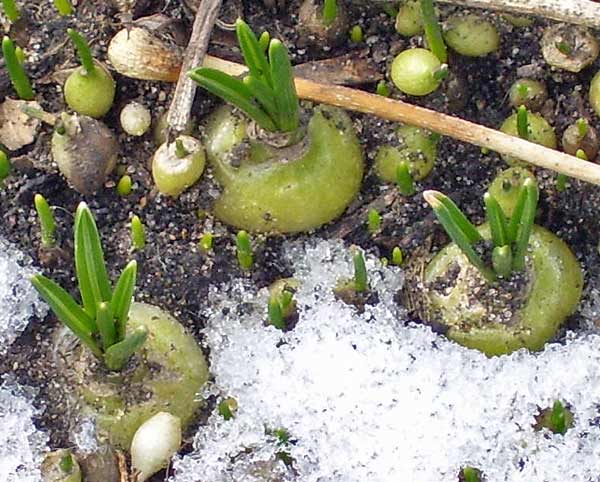
Right there in the dirt. Flower bulbs poised to show their glory. Green stalks poking out of the dirt making their first appearances in the sun. Right there on the tree branches. Tree branches shedding their winter death and peaking out ever so slightly with new growth. Right there in the birds and squirrels out scavenging for food because new little ones are on the way soon. The earth is just poised on the brink of new life. There is hope of spring–I don’t care what the groundhog says. Winter doesn’t get the last word–THANKFULLY!!
It isn’t coincidence that Transfiguration Sunday and the verge of Spring coincide. They both give us a picture of change that is happening all around us–transformation is in the air. Luke’s account of the Transfiguration of Jesus on the mountain details how Jesus was changed before the disciples’ very eyes. He looked different, and a voice from heaven claimed Jesus and invited those present and those hearing the story to listen to him. (Luke 9:35). From this point in the story, Jesus heads to Jerusalem and Holy Week–the Garden of Gethsemane, arrest, the cross, and death. We are about to enter this time in our church year when these events are the focus. But even as we enter Lent this coming week on Ash Wednesday, we do so with the knowledge that death doesn’t get the final word. After Lent comes Easter. The cross leads to the tomb, and then the tomb is found empty. There is life after death. We are all in the process of transformation that proclaims Resurrection–Life after death–Hope. It’s quite a journey, and it all starts again on Wednesday!

How do we imagine this scene where Moses is on the mountain receiving the Ten Commandments? This scene has been portrayed in a number of ways. A simple Google search will show how some have imagined it. If you have ever seen images of the Michelangelo sculpture of Moses[1], the horns on his forehead come from this passage. Some older translations describe Moses’ glow as him having horns.[2] More contemporary translations match today’s reading of his face being aglow. I love the image of Moses coming down with his face aglow from his time with God. What would it be like to spend such intense time with God and be in God’s presence such that your face glowed when others saw you afterward?
Lent, for us today, is a 40-day season that serves as a time for reflection and repentance before the Resurrection. We often associate it with somber, minor keys. One way to look at this is that for reflection and repentance we must look inside ourselves and examine who we are. Ash Wednesday offers us this opportunity as we acknowledge our own mortality through the dust. This reflection is difficult for many and uncomfortable for most. But that is also where transformation and change can take place. Transformation is often difficult, but it is worth it in the end. Transformation, after all, is what God is all about in our world–transforming death into new life.
 When Steve and I visited Monticello in Charlottesville, VA this past October, we witnessed transformation in process. Underneath a cellar overhang there were Monarch butterflies transforming. The chrysalis’ were hanging there, and we could see one that was almost ready to hatch. The wings were visible through the clear covering.


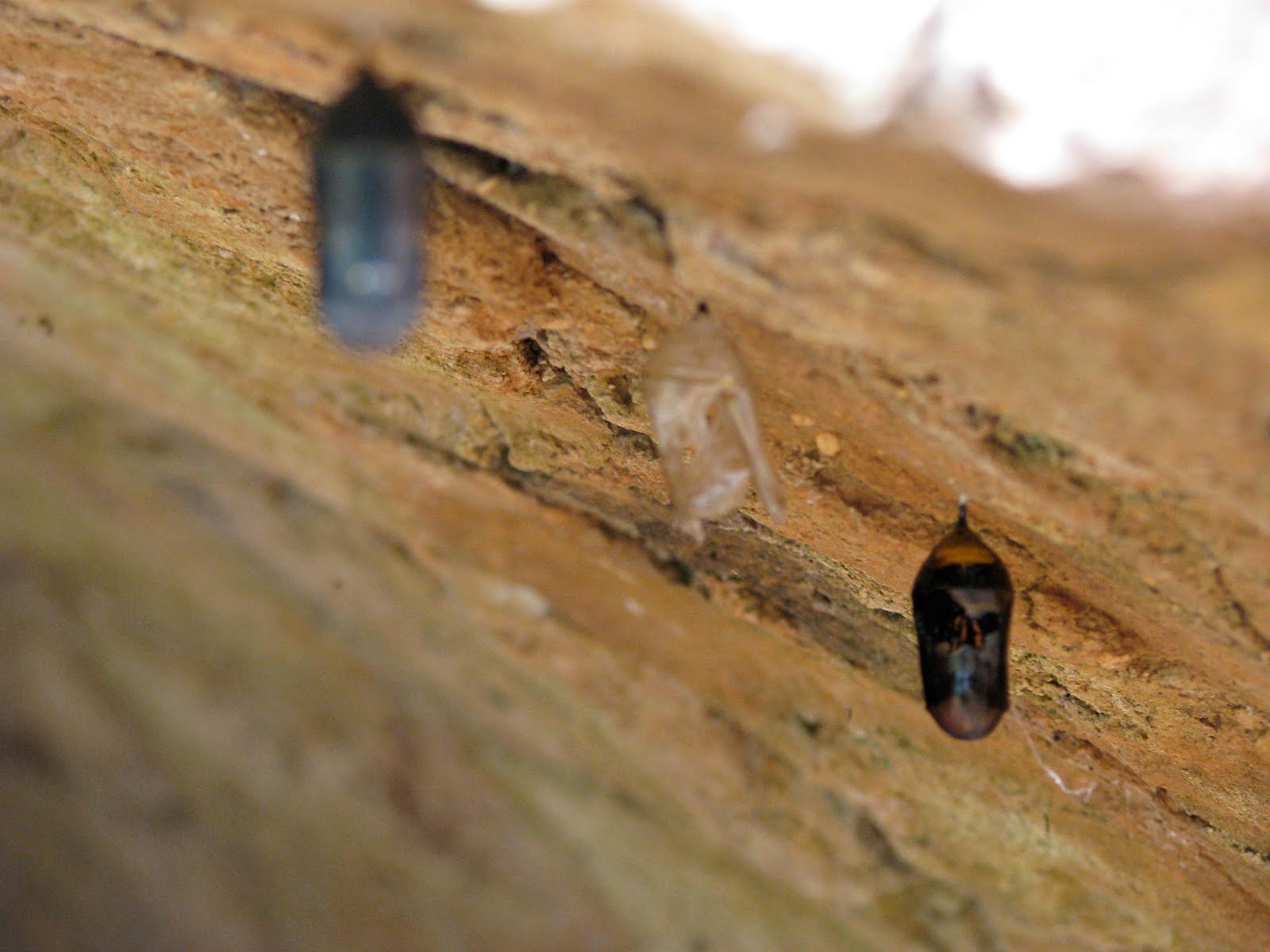 And many monarchs, having just finished their own transformations, filled the gardens. It was so beautiful to see these butterflies going through the difficult process of transformation, but we know in the end it is worth their efforts to change from caterpillar to butterfly. This is the reason butterflies are representative of the resurrection. Lent is like the time the caterpillar spends inside the chrysalis–internal change is happening, but the transformation of Easter is worth all the work that Lent brings. New life is the result, and what a beautiful transformation it is.
 The journey ahead brings us Ash Wednesday, Lent, Holy Week, and ultimately Easter. It also brings us an invitation. An invitation to journey with the story of our faith. An invitation to live into the rhythm of the church year. An invitation for transformation through intentional time with God. An invitation for a journey with God to see where God is working in and around us. It has been said that Moravians are Easter People. We don’t let Easter sneak up on us because we live into these practices that prepare us for the Big Event—Easter morning! Through the years we have done the hard work of Lent well, have lived into Holy Week through worship and our Holy Week readings of the Gospel texts. We appreciate Easter more, because we have prepared our hearts and minds ahead of time. May we continue this tradition and live into Lent. Through this time, I wonder how our faces might glow if we embrace these next 40 days with intentionality. I wonder how we might see those around us glow when they have spent time with God over these next 40 days.
Many times people choose to give up something, often a favorite food, during Lent to remind us of our hungering after God. This is good and can be an effective teacher during these 40 days. But what if we instead choose a new habit to undertake during the next 40 days–something that will encourage us in the journey ahead. Or maybe giving up one thing and adding something else works well for some of us. Through both, God can work to help transform our living with God. Maybe we are led to focus on gratitude during Lent, and spend time daily writing a thank you note to someone who has touched our lives or start a list of all the things we’re grateful for. Maybe we are led to focus on prayer, and spend time in conversation with God and Moravians from around the world by praying the Daily Text during Lent. Maybe we are led to focus on music, and read a hymn a day and use the words as our prayer. Maybe we are led to visit neighbors or strangers we have yet to get to know. The possibilities are endless. How is God leading you to transform your life during Lent?
“Holy is the time and holy is this place,
and there are holy things that must be said.
“Let us say to one another what our soul whispers…
O Holy One, cast your tents among us;
come into our ordinary lives and bless the living!”[5]
Amen.
 Living On Emmaus Ave